


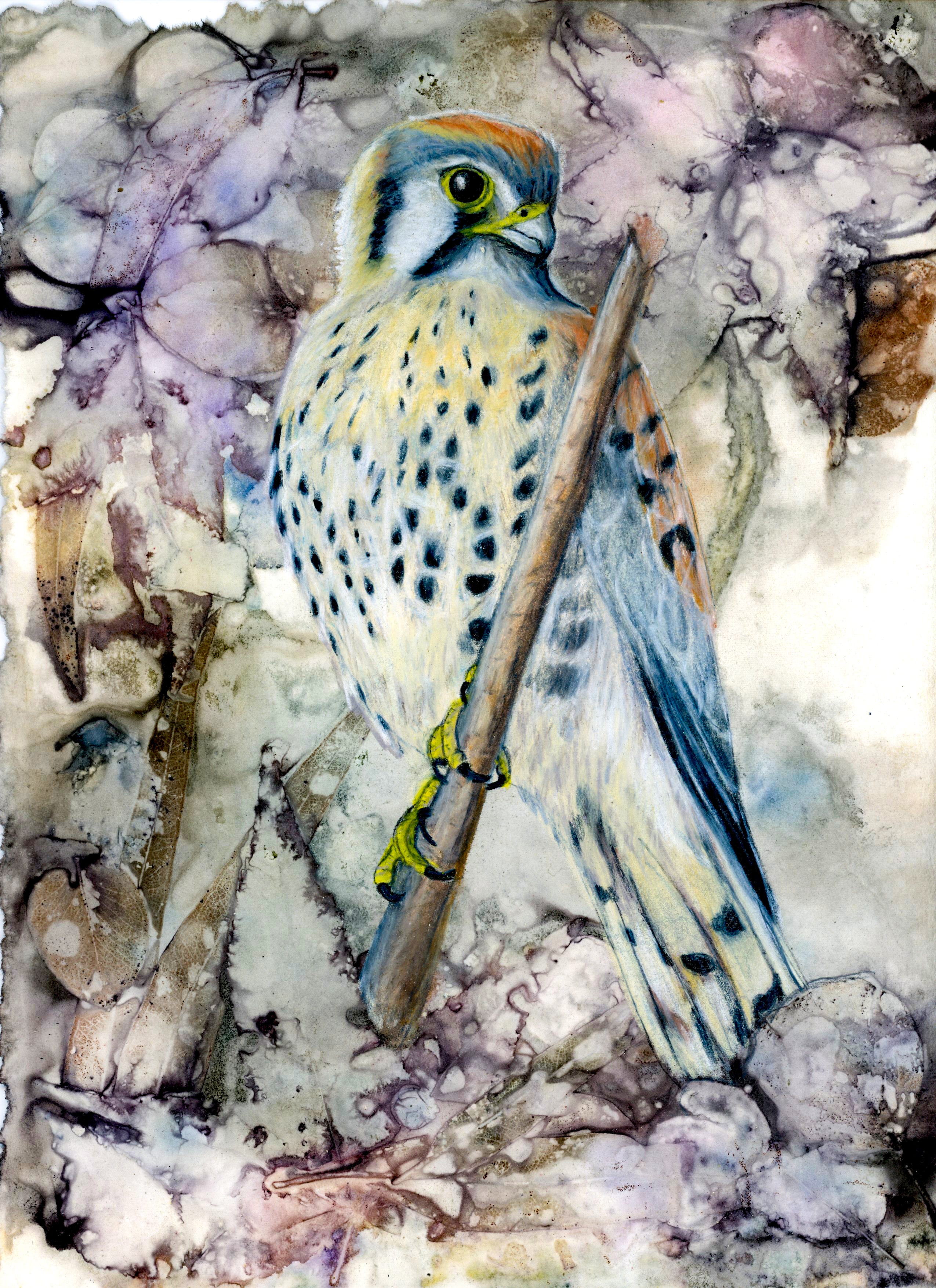
My house in Banning has three Aleppo pines in the side yard that are undoubtedly as old as the 1925 house. Well-loved by local birds, the acorn woodpeckers have drilled cavities for nesting and created granaries for the coast live oak acorns they gather from the backyard. The first two years I lived in this house, one of those abandoned cavities was home to a pair of American kestrels.
I delighted in them as well as the pair of red-tailed hawks across the street. At least, I did until all their babies fledged at once the second spring. The red-tailed parents let loose territorial screams as the parent kestrels shouted obscenities in falcon and dive-bombed their heads. The three fledgling hawks begged, yelling at increasing volumes at their distracted parents, flinching while the kestrels pounded on them as well. All the while, the three fledgling falcons’ shrill demands for food added a piercing rhythm to the din. And suddenly none of them were charming. I hid inside with the stereo turned up, waiting for the ruckus to resolve itself.
American kestrels, North America’s smallest falcon and arguably most beautiful raptor, aren’t considered endangered but their population has been declining since the mid-60s. A February 2026 paper published in Ecosphere analyzed available data across the continent and detected a decline of approximately 1%-2% per year from 1986 to 2019. Overall, this suggests a 29% population decline and they continue to decline. Twenty years ago, however, in my noisy yard, they seemed a little too common.
The fledgling kestrels, two females and a male, were rowdy and restless. As they started to peer further out of their pine cavity and jockey for the best position, the bigger sisters eventually pushed their brother out. I found him running in my side yard, his wings almost ready but not tested.
I sighed, thinking of the feral neighborhood cats. Then I ran him down, scooped him up despite his protests, and admired him. He was probably 100 grams, fit in the palm of my hand, and was pure spitfire. I thought about keeping him and putting him on my falconry license, but it was a fleeting thought once his parents noticed what I was up to. The chorus of killy killy killy pierced straight through my skull and torpedoed that fancy instantly.
So, I got a ladder and popped him onto the highest branch I could reach, warning him to steer clear of his brutish sisters until he figured out his wings. He found his way back to safety and the whole family made it through the spring with flying colors of blue, rust, and beige. Sometimes I think about him and wished I had made a different decision, but only because I never had kestrels in my yard again.
No one can point a finger at a single reason for the kestrel’s decline, but the 2026 study supported previously proposed factors including disappearing arthropods, second-generation rodenticides, neonicotinoid insecticides, and predation. Fewer grasshoppers and dragonflies, poisoned mice, and sterile fields are probably only part of the perfect storm. I watched another challenge play out in my front yard and despite appearances, it wasn’t the neighboring hawks.
Another major challenge to kestrels is competition for nesting sites. The next year, invasive European starlings arrived and took over the nest cavity. There were more of them, and they were bigger and aggressive. The kestrels had to find someplace else to raise a family. It may not be one of the primary drivers for the little falcons’ decline, but it is certainly one of many reasons we see fewer and fewer of them. I wish I had known that the little male kestrel hatched in my yard, held in my steady and admiring hands, was a once in a lifetime moment in the shifting phenology of my yard.
The primary hands-on conservation effort to help with limited nest sites has been nest box programs across the country. Fortunately, kestrels readily take to appropriately crafted and placed human-made cavities and have even shown site fidelity to areas where they are successful. It’s a wonderful start, and if you want to help, supporting your local nest box program is a meaningful way to do it. But it’s just that, a start.
I know I did the right thing two decades ago when I put that little male kestrel back in the boughs, but I think about him and his family every spring. I wish I had paused to truly enjoy the cacophony of a richly successful spring. I wish I could have held space for them in my yard.
I think though, that these moments of small loss that haunt us are just as important as the conservation successes. They are the moments we long for and the stories we tell. And maybe, just maybe, they are enough to inspire another generation to keep fighting.
Written Bird is a reader-supported publication. I have turned paid subscriptions back on after an 8 month hiatus. If you were previously a paid subscriber, your subscription was ended so there would be no billing surprises for anyone. You are very welcome to re-subscribe if you are enjoying the essays!